Prank Voice & Funny Sound FX
- 3.7
- Rating
- 100.00K
- Installs
- Free
- Price

 Analysis by App-foxy
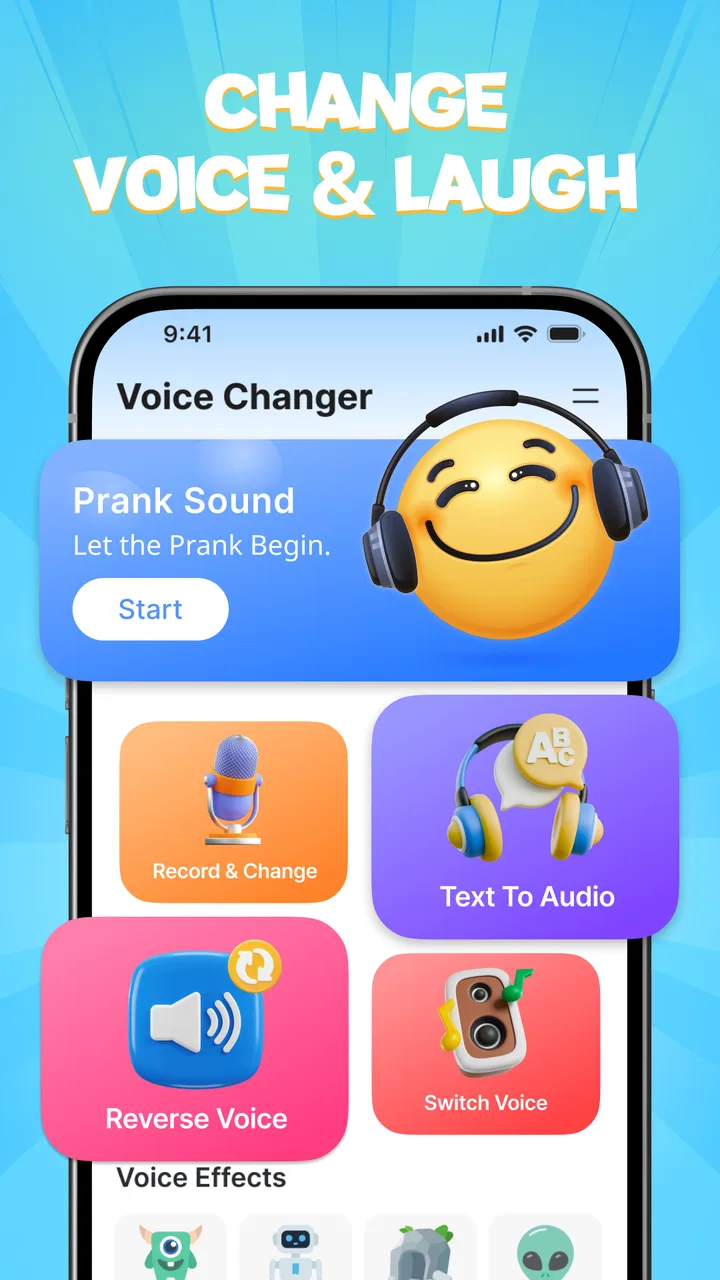
Prank Voice & Funny Sound FX is the kind of entertainment app I would open when a group chat needs a quick laugh rather than a polished audio-production tool. Its basic appeal is immediate: choose a funny sound effect or work with a recorded voice, alter the result, and share the joke with friends. That narrow purpose is also the key to judging it fairly. I would not install it expecting a complete voice studio. I would install it for fast, low-pressure experiments that can turn an ordinary message into a small prank.
After spending time with it, my opinion is mixed in a useful way. The first session is easy to understand, and the app’s free access makes trying it feel risk-free. The harder question is whether it deserves permanent space on a phone once the first wave of novelty disappears. For me, that depends almost entirely on how often I communicate with people who enjoy silly audio messages. If your friends respond well to playful voices and sound effects, it can become a handy little source of comic relief. If you prefer serious recording, careful editing, or a large library of regularly refreshed content, its limits become noticeable quickly.
What the first week feels like
The first-week appeal comes from the short distance between an idea and a shareable result. I can imagine opening it before sending a voice message, recording a line, trying a modified version, and deciding whether it fits the conversation. That workflow is more approachable than opening a full audio editor, searching through technical controls, and worrying about whether the result sounds professionally produced. Here, the fun is in the imperfection.
You May Also Like

 Pandora - Music & Podcasts
Pandora’s Music Is Easy to Start, but Harder to Recover
Pandora’s strength is its low-effort path from a seed to a station. Its weak spot is how much confidence it asks you to place in connection, setup, and quiet recovery.

 8 Ball Pool
 Is Built on Rivalries, Rematches, and Routine
A close look at the rivalries, rematches, shared routines, and unanswered safety questions that turn a quick pool match into a persistent mobile community.

 Samsung Music
’s Quiet Strength Is Playing What You Already Own
Its reach comes less from spectacle than from dependable access to a personal library. That simplicity is both the app’s strongest retention engine and its ceiling.

 AccuWeather: Weather Radar
AccuWeather Review: A Quick, Clear Forecast for Everyday Decisions
For everyday plans, the best forecast is the one you can understand quickly. AccuWeather makes rain timing, radar, and local conditions easy to act on, with a few trade-offs.

 Hill Climb Racing
Why Hill Climb Racing Still Turns Crashes Into One More Run
A tiny car, a bumpy hill and one more upgrade: Hill Climb Racing keeps resurfacing because its simple chaos makes every near-miss feel personal.

 AliExpress - Shopping App
AliExpress Makes Global Shopping Feel Personal, but Shoppers Bear the Risk
AliExpress turns a global marketplace into a pocket-sized discovery engine. Its reach is useful, its shopping loop compelling, and its trade-offs easy to miss.
More From Our News Desk
View All News


That makes the app especially suitable for casual situations: a birthday greeting that needs a ridiculous delivery, a reaction to a friend’s message, or a playful answer during a group conversation. The best results are usually brief. A long recording gives the joke too much time to wear out, while a short phrase lets the altered voice or effect make its point before the listener becomes distracted.
I also like the fact that the app combines two related activities instead of focusing only on a soundboard. You can use a funny effect as a quick standalone gag, but recording and modifying your own voice gives the experience a more personal angle. That distinction matters. A pre-made sound can be amusing once, while a familiar friend saying an ordinary sentence in an unexpected voice often feels more specific to the conversation.
During the first few days, I would approach it as a message-making tool rather than something to browse endlessly. Before recording, I would decide what the joke is supposed to be. Is the humor coming from the words, the delivery, or the contrast between a normal sentence and an unusual voice? Making that choice first prevents the common mistake of trying every effect without a clear purpose.
One practical workflow is to record the sentence in a quiet place, listen once for understandable wording, and only then experiment with the modification. This is a small but important habit because an entertaining effect cannot rescue a recording that is difficult to understand. I would also keep the spoken line short enough that the listener recognizes the joke immediately. The app is stronger as a quick punchline than as a place for extended storytelling.
Sharing is central to the experience, but I would treat it as a final step rather than the entire reason to use the app. First listen back privately. A voice that sounds funny in your own head can feel awkward when played aloud, and an effect that works on one phrase may make another phrase muddy. That quick review helps avoid sending something that needs an explanation afterward.
The app is free, which lowers the barrier for experimenting with it alongside friends. Its content rating is Everyone, so it is positioned as broadly accessible entertainment rather than an adult-focused prank tool. Even so, I would still use ordinary judgment before sending altered audio to someone who might misunderstand the joke. A harmless effect between friends can be received very differently in a work conversation, a family group, or any situation where tone matters.
Its current version is 1.0.1, and that early version number shapes my expectations. I see it as a straightforward utility with room to mature, not as a deeply established audio platform. The developer, APSOFT HKT, has kept the concept focused: funny sound effects, voice recording, modification, and sharing. That focus helps a new user understand the purpose quickly, although it also means the app has less to offer when the initial experimentation is over.
Who gets the most from the novelty
I would recommend trying it to people who regularly send voice notes, enjoy harmless practical jokes, or want a simple way to make a familiar group chat less predictable. It can also suit parents looking for a lightweight source of silly audio play with children, provided the sharing context is supervised appropriately. The app’s value comes from participation, so it works best when more than one person is willing to play along.
It is less convincing for someone who wants precise control over pitch, timing, layers, cleanup, or musical production. A dedicated audio editor is the better choice when the goal is a polished clip. Likewise, a conventional soundboard may be preferable if you only want to trigger ready-made effects without recording your own voice. Prank Voice & Funny Sound FX sits between those uses: more personal than a basic effect board, but less ambitious than a serious editor.
What remains useful after the first month
The month-to-month value is not automatic. I do not think this is the sort of app that becomes a daily habit for everyone. Its recurring usefulness depends on having fresh social situations where a modified voice adds something. In my experience, that means it is better understood as an occasional conversation accessory than as an app I would open every morning.
It can remain useful when attached to recurring moments. For example, a group of friends might use it for exaggerated replies during a shared chat, or someone might create a playful greeting for a family member who enjoys that style of humor. The important point is that the app supports a social ritual; without that ritual, the icon can quickly become easy to ignore.
A good long-term workflow would be to save the app for specific occasions rather than using every effect in one sitting. If I tested every amusing option during the first evening, I would probably exhaust the surprise before I had a reason to return. Spacing out experiments preserves some novelty and makes the app feel like a small box of tools instead of a one-time demo.
I would also vary the role it plays. One week, it might be used to transform a short greeting. Another time, it could provide a sound effect at the end of a spoken punchline. On another occasion, the best use might simply be recording a normal sentence and comparing how different treatments change its mood. This kind of variation gives the app more staying power than repeatedly applying the same effect to the same style of message.
Still, the ceiling is clear. The app’s long-term value is tied to the range and freshness of its effects, the ease of making a recording worth sharing, and the willingness of your contacts to listen. If those three elements do not line up, the experience becomes repetitive. A person who rarely sends audio will probably run out of reasons to open it sooner than someone whose conversations already revolve around voice notes.
The audience response can also change the calculation. A single funny clip may receive enthusiastic reactions, but repeated altered messages can become predictable. I would use the app sparingly enough that people associate it with an occasional surprise rather than an unavoidable communication style. That restraint is not a technical feature, but it is probably the most important long-term tip I can offer.
Its public reception suggests a modest but real audience: the app has passed 100K installs, with a 3.7 average from 237 ratings and 15 reviews. I read that as interest without treating it as proof that the experience suits everyone. A rating in that range fits my impression of a focused novelty app: enjoyable for the right social circle, but not universally compelling.
How it compares with familiar alternatives
Compared with a normal voice recorder, this app adds the playful step that makes a recording feel worth sharing. A standard recorder is better when clarity, organization, or dependable capture matters. It is the safer choice for interviews, reminders, or anything where the voice should sound natural. This app is better when the recording itself is part of the joke.
Compared with a full audio editor, it is less intimidating and faster for casual use. A professional tool gives more room for correction and creative control, but that extra control can slow down a simple prank. I would choose the editor for a finished project and this app for a spontaneous message that should take minutes, not an evening.
Compared with a typical sound-effects board, its advantage is personal involvement. Hearing a familiar voice altered can create a stronger connection than pressing a button for a generic noise. The trade-off is that the user has to contribute a recording and make a judgment about whether the result is actually funny. That extra step is also where the app’s best moments come from.
In other words, it does not replace those alternatives. It fills a smaller space between them. That is a strength if you want a quick, friendly prank without technical preparation, but a weakness if you expect one entertainment app to cover recording, editing, sound design, and long-term content discovery.
Maintenance, friction, and reasons the novelty can fade
The maintenance burden is light in the sense that the app does not require a complex setup routine to be enjoyable. I can return after a break and understand its purpose immediately. There is no need to learn a large editing system before making a usable clip. That low learning curve is one reason I would keep it installed for occasional use even if I did not open it every week.
However, low maintenance is not the same as unlimited freshness. The user has to supply much of the creativity. If I keep recording the same kind of sentence, sending it to the same people, and choosing the same style of effect, the app’s charm declines even if the controls remain easy to use. The maintenance task is therefore social and creative rather than technical: find a new context, keep the clip short, and avoid overusing the joke.
There is also a practical friction in deciding whether a result is shareable. A funny voice effect can make a recording amusing to the person who created it but confusing to everyone else. I would always listen with the recipient in mind. If the words disappear beneath the effect, I would either shorten the line, record it again, or skip sharing it. That extra judgment is part of using the app responsibly and effectively.
Another source of fatigue is the difference between surprise and repetition. The first altered greeting may be memorable because it breaks expectations. The fifth similar greeting may feel like the same trick with a different surface. I would avoid using the app as a default response to every message. It works better when the normal conversation has established a reason for the joke.
Some users may also find the concept too narrow after the initial session. The app is built around funny voices and sound effects, so anyone seeking broader entertainment will need another app alongside it. That is not a flaw in the basic idea, but it does affect whether the app earns a permanent place on a crowded phone. For me, the decision comes down to frequency of use rather than technical ambition.
Privacy and courtesy matter whenever a recording includes another person. I would not record someone as a prank without considering whether they are comfortable with it, and I would be careful about sharing audio beyond the original group. The app’s playful purpose should not be used to disguise a message, embarrass someone, or create confusion about who said what. A short warning or clear context can make the difference between a shared laugh and an unwanted surprise.
For younger users, the Everyone rating makes the app approachable, but supervision still makes sense when recording and sharing are involved. Children may understand the effect as a game while missing the social consequences of forwarding an altered voice. I would encourage them to use it with people they know and to ask before recording someone else. That keeps the entertainment focused on creativity rather than discomfort.
Small habits that improve the results
I found that the strongest approach is to write the line before opening the recorder. A sentence with a clean beginning and ending is easier to transform than a rambling thought. I would then record two versions: one natural and one deliberately exaggerated. Sometimes the natural delivery becomes funnier after modification, while the exaggerated take can turn into noise.
I would also test the clip at the volume and setting where the recipient is likely to hear it. A result that works through headphones may be less clear from a phone speaker, especially if the effect changes the texture of the voice. This is a simple quality check that many casual users skip, and it prevents the recipient from having to replay the message several times.
For sound effects, timing is more important than quantity. Instead of placing an effect everywhere, I would use one at the moment the listener expects a normal ending. That contrast usually creates a cleaner joke and makes a short clip feel intentional. If the effect is the entire message, I would give the listener enough context to understand why it is there.
Finally, I would keep a personal rule that every shared clip should work without a long explanation. If I have to write a paragraph telling a friend why the audio is funny, the recording probably needs another attempt. This rule keeps the app’s quick, casual character intact and reduces the chance that the novelty becomes work for both sides.
My long-term verdict
After the first-week excitement, Prank Voice & Funny Sound FX earns its place most convincingly as an occasional social tool. I would keep it available for the right group chat, a playful greeting, or a quick voice-based joke, but I would not describe it as essential entertainment for every phone. Its best quality is accessibility: the idea is easy to grasp, and the distance from recording to sharing is short.
The app is worth trying if you enjoy turning ordinary messages into small performances. It is free, aimed at Everyone, and focused enough that you can understand its purpose without a long learning period. The developer’s compact concept works when you want a personal joke rather than a generic button-triggered sound.
I would skip it if your priority is detailed audio editing, natural voice recording, serious content creation, or a large entertainment platform that stays interesting without help from your friends. A dedicated recorder, editor, or soundboard will be a better fit in those cases. This app does not need to compete with those tools to be useful; it simply needs to make a few conversations more amusing.
My final judgment is that it has lasting value only when novelty is turned into a social habit. Use it occasionally, keep recordings concise, listen before sharing, and save the most surprising effects for moments that deserve them. Used that way, it can remain a pleasant little companion instead of becoming another forgotten download. I would recommend it to playful voice-message users, with the honest warning that its staying power comes less from depth and more from how creatively and thoughtfully you bring it into real conversations.
FAQs for Prank Voice & Funny Sound FX
01What features does Prank Voice & Funny Sound FX offer?
Prank Voice & Funny Sound FX provides a variety of features, including voice changers, sound effects, and prank tools. You can modify your voice with various filters and add effects like echoes or robotic sounds. The app also offers a library of funny sound effects that can be used for pranks or entertainment.
02Is Prank Voice & Funny Sound FX safe to use?
Yes, the app is safe to use as long as you download it from a reputable source like the Google Play Store or Apple App Store. It does not require unnecessary permissions, and user data privacy is maintained. However, always ensure your device's security settings are up to date before installation.
03Does the app require an internet connection?
Prank Voice & Funny Sound FX can be used offline for many features, such as applying voice filters and accessing pre-downloaded sound effects. However, some features, like downloading new sound packs or updates, may require an internet connection. It’s best to check the specific requirements for optimal use.
04Are there any in-app purchases or ads?
The app is free to download but includes in-app purchases for additional features and sound packs. Users can choose to buy these extras to enhance their experience. It also contains ads, which can be removed by purchasing the ad-free version, providing a smoother, uninterrupted experience.
05Can I use Prank Voice & Funny Sound FX on all devices?
Prank Voice & Funny Sound FX is compatible with most Android and iOS devices. Ensure your device meets the minimum requirements for the app to function smoothly. Check for compatibility in the app store listing before downloading to avoid any performance issues.
Pros
- Wide variety of sound effects.
- User-friendly interface.
- Customizable prank settings.
- Real-time voice modulation.
- High-quality audio output.
Cons
- Contains ads in free version.
- Limited features without subscription.
- Occasional app crashes.
- Requires internet for some effects.
- In-app purchases can be pricey.

Prank Voice & Funny Sound FX
Gallery